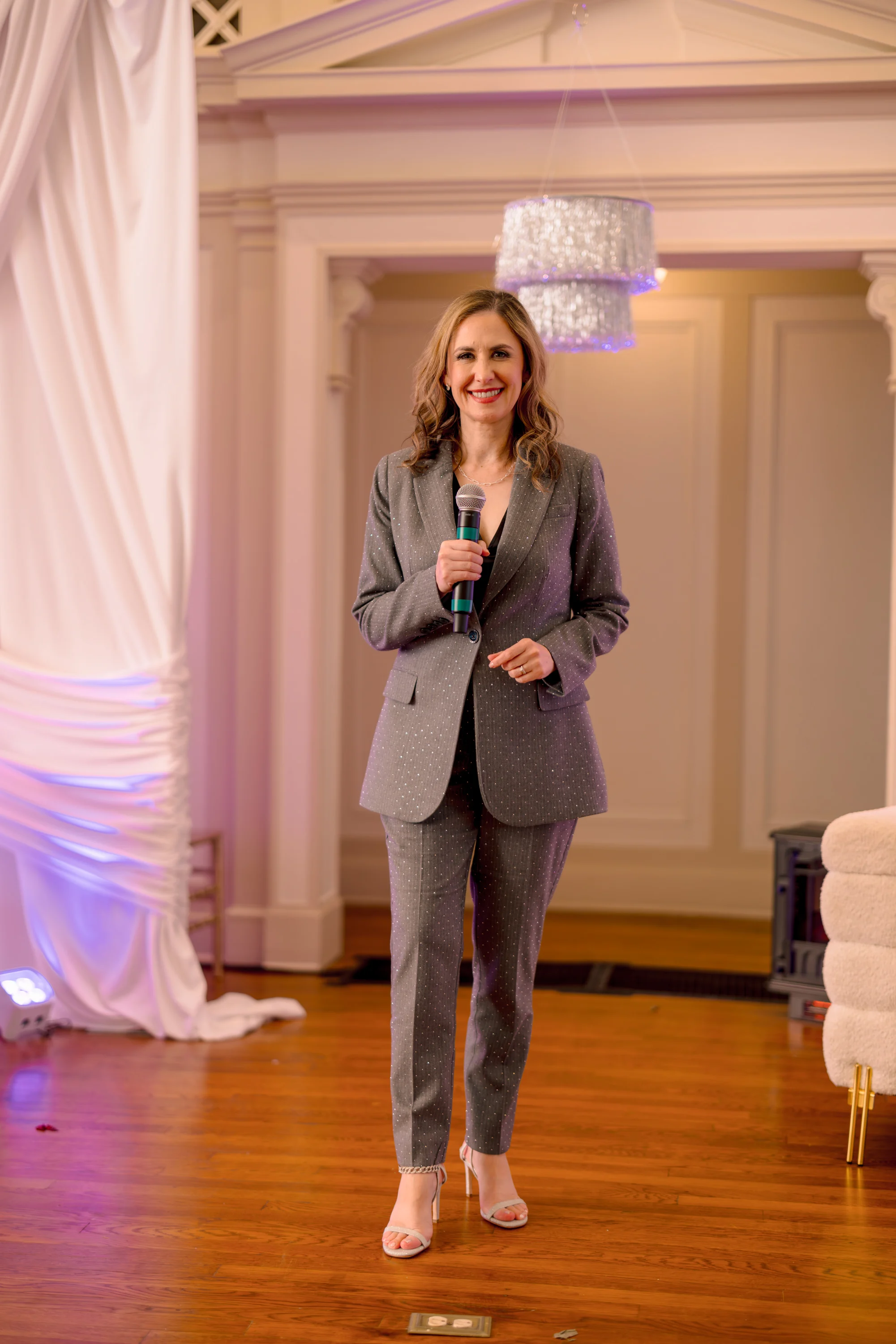
Sweaty palms, a racing mind, and the thought “What if I mess up?” may all be described as public speaking fear. The useful question is more specific: What exactly are you afraid will happen?
You may be concerned about forgetting your words, being judged, freezing, losing the room, handling a technical failure, facing criticism, or entering a situation you cannot predict. Each concern creates a different preparation problem. Treating them all as a general lack of confidence makes it harder to choose the right response.
This guide helps you identify the fear, understand what may be driving it, and practice a practical response. The techniques apply to presentations, meetings, panels, media interviews, webinars, pitches, and other situations where your communication is highly visible.
A face of public speaking fear
Fear of Forgetting: Losing Your Train of Thought Mid-Speech
You know the material, but the possibility of losing your place makes every pause feel dangerous.
Why this fear shows up
Anxiety competes with working memory. When you are monitoring every word and trying to sound perfect, your mind has less room to hold the next idea.
Word-for-word memorization can make the problem worse. If one sentence disappears, the entire sequence may feel lost because you have not practiced another route through the material.
What to do
Build three to five anchors
Organize the talk around a small number of ideas you can name in a few words. If you know the purpose of each section, you can return to the structure without reconstructing a script.
Use prompts instead of paragraphs
Put one key phrase, example, or transition on each note card or presenter note. The prompt should help you remember the idea while leaving you free to speak naturally.
Rehearse aloud
Silent review can create false confidence. Stand up, use your slides or notes, and say the full talk at least once under conditions that resemble the real event.
Prepare a recovery phrase
A simple line such as “Let me pause for a moment and return to the main point” gives you time to breathe, check a cue, and continue without apologizing at length.
Know the opening and closing especially well
A confident opening helps settle your rhythm. A clear closing ensures that the audience leaves with the central message even if the middle included an imperfect moment.
The audience does not have your script. A brief pause followed by a clear next point usually reads as composure, not failure.
A face of public speaking fear
Fear of Judgment: Worrying About What Others Think
Concern about how you look, sound, or compare with others can pull your attention away from the people you are there to help.
Why this fear shows up
Speaking makes your thinking visible. That exposure can activate a natural desire for approval, especially after a difficult presentation or in a room where the stakes feel high.
Perfectionism turns normal audience behavior into evidence. A quiet expression, a glance at a phone, or one skeptical question can begin to feel like a verdict when it may have nothing to do with your performance.
What to do
Define the value you are there to provide
Write one sentence that answers: What should this audience understand, decide, or do because I spoke? Use that sentence to direct your attention back to service and contribution.
Set useful success criteria
Measure the presentation by factors you can influence, such as clarity, preparation, relevance, and whether you made the next step understandable. Approval from every person is not a workable standard.
Create connection early
Use a relevant question, observation, or brief example to acknowledge the audience’s situation. Once the room feels like a conversation, it becomes easier to stop treating it like a panel of judges.
Test the story you are telling yourself
When you think “They will not take me seriously,” ask what evidence supports that conclusion and what evidence challenges it. Replace the prediction with a factual reminder of your preparation and experience.
Look for individual people
Make deliberate eye contact with one receptive person at a time. Speaking to people rather than to an abstract crowd makes your delivery more conversational and grounded.
Credibility does not require a flawless performance. It grows when you communicate something useful with preparation, respect, and sound judgment.
A face of public speaking fear
Fear of Freezing Up: Going Blank Under Pressure
A blank mind can feel like a complete loss of control, even though the recovery may take only a few seconds.
Why this fear shows up
A high-pressure moment can trigger a physical stress response. Breathing becomes shallow, attention narrows, and access to information that felt easy during practice can become temporarily harder.
The fear is often intensified by a second layer of worry: If I pause, everyone will know I am nervous. That thought adds pressure at the exact moment your mind needs room to reset.
What to do
Regulate your breathing before you begin
Inhale for four counts and exhale for four counts several times. A longer, steady exhale can help reduce the physical urgency that makes clear thinking harder.
Use a neutral reset phrase
Prepare language you can access automatically, such as “Let me come back to the question at the center of this.” The phrase creates a bridge while you locate your next point.
Map the talk, then practice jumping between sections
Do not rehearse only from beginning to end. Start at section three, move to the conclusion, and return to section two. This teaches your brain that there are several ways back into the material.
Keep one visible prompt
A one-page outline, a confidence monitor, or a short list of anchors can be a useful safety net. Place it where one glance gives you the next idea.
Allow the pause
Stop, plant your feet, breathe, and consult the prompt. Filling the space with rushed words usually extends the disruption. A quiet reset is more controlled.
A freeze is a temporary stress response. A practiced recovery sequence can keep a few quiet seconds from controlling the rest of the presentation.
A face of public speaking fear
Fear of Boring the Audience: Losing Their Attention
A yawn, a quiet room, or a glance at a phone can make you question the material while you are still presenting it.
Why this fear shows up
Speakers often overinterpret audience behavior. People look away for many reasons, and silence may signal concentration rather than boredom.
There can also be a real content problem when expertise is presented without enough context. Dense information becomes difficult to follow if the audience cannot see why it matters or where it is going.
What to do
Lead with relevance
Tell people early why the subject matters to their work, decision, or risk. A clear reason to listen is more reliable than a dramatic opening that is unrelated to the message.
Use stories and examples with a job to do
Choose a concise case, analogy, or personal observation that clarifies the point. The story should help the audience understand or remember something, not simply add entertainment.
Make the structure visible
State the main point, signal where you are in the talk, and summarize before moving on. Listeners can stay engaged more easily when they know how each section connects.
Vary pace and participation
Use a pause before an important statement, shorten your sentences, ask a focused question, or invite a brief show of hands. Variation helps the audience reset its attention.
Edit for usefulness
Limit the presentation to the few points the audience needs most. Material can be accurate and still be unnecessary for this particular room.
Engagement comes from relevance, clarity, and connection. You do not have to become an entertainer to hold an audience’s attention.
A face of public speaking fear
Fear of Technology Failing: When Your Tools Let You Down
Slides, microphones, video platforms, and demonstrations can fail at the moment you planned to depend on them.
Why this fear shows up
Technology introduces variables you cannot fully control. The fear grows when the presentation has been built so tightly around a tool that continuing without it seems impossible.
A glitch may also feel like a threat to credibility. In practice, audiences usually evaluate how you respond more than the fact that a device or platform failed.
What to do
Test the actual setup early
Open every file, test sound and video, confirm adapters, and learn how the room or virtual platform works. A rehearsal on your own laptop does not test the full presentation environment.
Keep practical backups
Save the presentation locally, in the cloud, and in a portable format. Carry a one-page outline and export essential visuals to a format that can open without special software or internet access.
Simplify the technology
Use only the tools that improve understanding. Every live poll, embedded video, animation, or demonstration should earn the additional point of failure it introduces.
Rehearse the message without the tools
Practice explaining every important idea with no slides and no microphone. Decide in advance what can be skipped and what must still be communicated.
Coordinate with technical support
For a larger event, review cues, files, microphones, and contingency plans with the technical team. Agree on who will troubleshoot while you continue.
Technology supports the presentation. Your judgment, clarity, and ability to adapt carry the message when the support disappears.
A face of public speaking fear
Fear of Criticism: Facing Tough Questions and Pushback
The question period may feel more threatening than the prepared remarks because you cannot script every response.
Why this fear shows up
Professionals can begin to equate credibility with having an immediate answer to everything. That standard makes an honest question feel like exposure and a challenge feel personal.
Previous criticism can also shape the room before anyone speaks. You may enter prepared to defend yourself, which makes it harder to listen carefully and respond to the actual concern.
What to do
Anticipate the strongest questions
List the likely objections, missing information, and competing priorities in the room. Prepare a concise answer, the evidence you can offer, and the limits of what you know.
Pause and confirm the question
Take a breath, then restate or clarify what you heard. “If I understand correctly, you are asking about…” gives you thinking time and prevents an answer to the wrong question.
Acknowledge what is valid
You can recognize a sound concern without surrendering the entire position. A clear acknowledgment demonstrates listening and often lowers the temperature of the exchange.
Answer, bridge, and return to the message
Respond directly, then connect the answer to the presentation’s central point. Avoid a long detour or a debate that leaves the rest of the audience behind.
Say when you do not know
Name the limit honestly and offer a specific follow-up. “I do not have that figure with me. I can send it by Friday” protects credibility better than an improvised answer.
Credibility includes the ability to think in public, acknowledge limits, and respond with respect. Complete certainty is not required.
A face of public speaking fear
Fear of the Unknown: Taking the Stage When You Do Not Feel Confident
An unfamiliar room, audience, format, or level of visibility leaves space for worst-case scenarios to fill in the details.
Why this fear shows up
The brain tries to protect you by predicting what could go wrong. With little experience to draw on, those predictions may feel more likely than they are.
The unknown also becomes larger when you try to control every outcome. Audience reactions, last-minute changes, and spontaneous questions will always include some uncertainty.
What to do
Replace unknowns with information
Ask about the audience, room, timing, format, technology, other speakers, and decision-makers. Visit the space or log into the platform early when possible.
Build experience gradually
Volunteer for a short update, facilitate part of a meeting, or present to a smaller group. Repeated, manageable exposure gives you evidence that you can handle the next level.
Run a full-condition rehearsal
Stand, time the presentation, use the actual materials, and practice the transition into questions. Familiarity with the sequence reduces the number of new decisions on event day.
Separate control from influence
You can control preparation, arrival time, structure, backups, and how you respond. You can influence engagement. You cannot control every reaction, and you do not need to.
Debrief with evidence
After the event, record what went well, what surprised you, and one adjustment for next time. This creates a useful memory of progress instead of preserving only the most uncomfortable moment.
Confidence grows from preparation and experience. You do not have to eliminate uncertainty before you accept a visible opportunity.
Put the guide to work
A 20-minute preparation plan
When time is limited, use this sequence to prepare the message and your response to pressure. A short, focused rehearsal is more useful than repeatedly reading the slides.
- 5 minutes
Name the message
Write the one idea the audience needs to understand, remember, or act on.
- 5 minutes
Map the anchors
Choose three to five points and one example that makes the message concrete.
- 5 minutes
Prepare for the fear
Select the face of fear that is most active and rehearse its recovery technique.
- 3 minutes
Say the opening and closing
Practice both aloud so you can begin with direction and finish with a clear point.
- 2 minutes
Settle your pace
Breathe, plant your feet, and say the first sentence at a measured pace.
What confidence looks like in practice
You can prepare for the fear without waiting for it to disappear.
Confidence is built through preparation, repetition, recovery, and evidence from real experience. A nervous moment does not cancel your expertise. It gives you a situation in which to practice using it clearly.
Choose one fear, apply one technique, and rehearse one recovery. That is enough to make the next speaking opportunity more manageable and more useful to the people listening.
Return to Trusted Voice Insights